
NewsRamp is a PR & Newswire Technology platform that enhances press release distribution by adapting content to align with how and where audiences consume information. Recognizing that most internet activity occurs outside of search, NewsRamp improves content discovery by programmatically curating press releases into multiple unique formats—news articles, blog posts, persona-based TLDRs, videos, audio, and Zero-Click content—and distributing this content through a network of news sites, blogs, forums, podcasts, video platforms, newsletters, and social media.

Tesamorelin vs Sermorelin: Key Differences, Applications, and Handling Guidelines
TL;DR
Tesamorelin offers sustained GH stimulation for targeted visceral fat research, while Sermorelin provides pulsatile release ideal for physiological rhythm studies.
Tesamorelin is a 44-amino acid stabilized analog with extended half-life, while Sermorelin is a 29-amino acid fragment that mimics natural pulsatile GH secretion.
Understanding these peptide differences helps researchers develop better treatments for metabolic disorders and improve human health through targeted growth hormone therapies.
These synthetic peptides mimic natural growth hormone release, with Tesamorelin lasting longer and Sermorelin pulsing like your body's own rhythms.
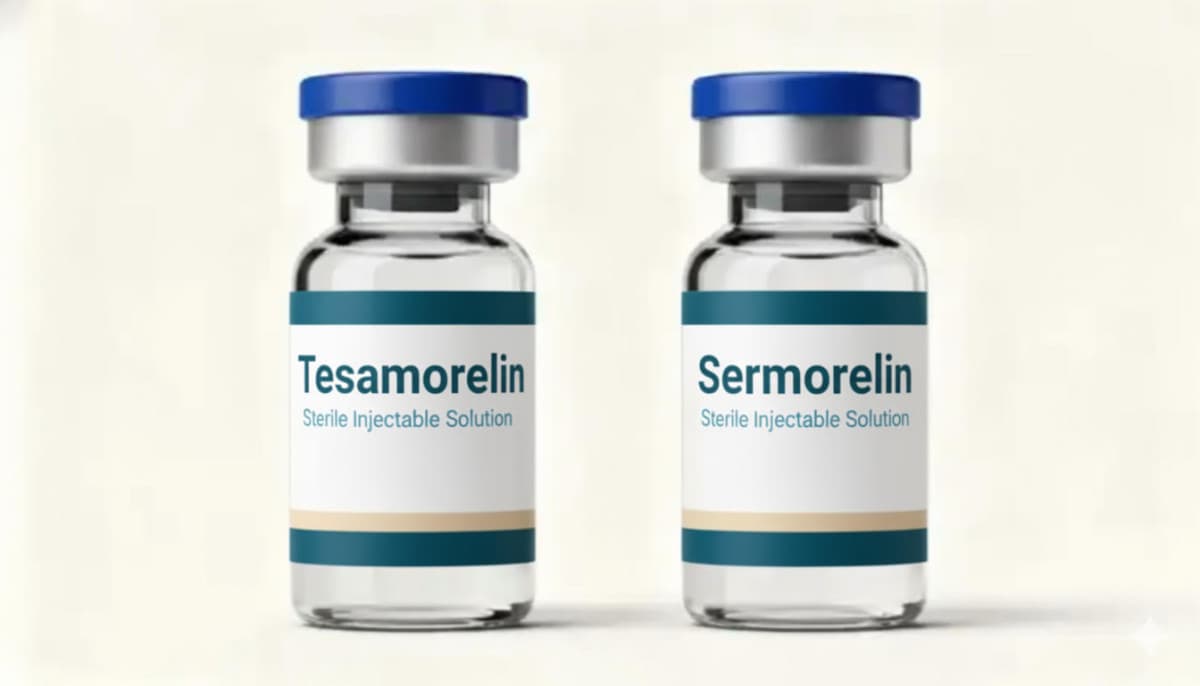
Tesamorelin and Sermorelin are both synthetic variants of growth hormone-releasing hormone (GHRH) that interact with pituitary receptors to promote the release of growth hormone, but they have distinct structural characteristics and pharmacological profiles.
Tesamorelin consists of 44 amino acids and is a stabilized analog designed to enhance receptor affinity and extend half-life, while Sermorelin is a 29-amino-acid fragment that corresponds to the endogenous GHRH(1-29).
Tesamorelin provides sustained receptor engagement resulting in prolonged downstream activity of GH and IGF-1, while Sermorelin promotes GH release in a pulsatile manner that closely resembles natural secretion patterns.
Tesamorelin supports research focused on visceral adipose modulation and prolonged anabolic signaling, while Sermorelin is advantageous for studies investigating physiological GH dynamics, endocrine rhythms, and tissue recovery mechanisms.
Tesamorelin is linked to IGF-1 elevation and VAT-associated metabolic readouts, while Sermorelin affects GH pulsatility, IGF-1 modulation, and rhythmic metabolic endpoints.
Lyophilized peptides should be stored at low temperatures (-20°C to -80°C) protected from moisture and light, while reconstituted peptides require immediate preparation in sterile conditions with appropriate solvents like sterile water, bacteriostatic water, or small amounts of DMSO.
Tesamorelin's stabilized modifications enhance shelf-life but require monitoring for chemical degradation when exposed to elevated temperatures or repeated freeze-thaw cycles, while Sermorelin's shorter sequence may be more susceptible to aggregation under high concentrations or unfavorable solvent conditions.
Dissolve peptides gently along the vial walls to minimize foaming using gentle swirling or flicking, clearly label vials with peptide name, concentration, solvent, and preparation date, and aliquot to minimize freeze-thaw cycles.
Careful handling, storage, and solvent conditions are essential because factors like molecular length, modifications, and storage temperature can affect peptide stability, and laboratory safety with proper sterile handling preserves peptide integrity for research purposes.
Curated from Press Services