
NewsRamp is a PR & Newswire Technology platform that enhances press release distribution by adapting content to align with how and where audiences consume information. Recognizing that most internet activity occurs outside of search, NewsRamp improves content discovery by programmatically curating press releases into multiple unique formats—news articles, blog posts, persona-based TLDRs, videos, audio, and Zero-Click content—and distributing this content through a network of news sites, blogs, forums, podcasts, video platforms, newsletters, and social media.

Understanding Peptides: Structure, Mechanisms, and Therapeutic Applications
TL;DR
Loti Labs' peptide research offers competitive advantages in therapeutic design and metabolic studies through enhanced receptor targeting and stability modifications.
Peptides function through specific mechanisms including receptor binding, enzyme modulation, and structural interactions determined by amino acid sequence and chain length.
Peptide research advances human health by enabling tissue repair, metabolic regulation, and antimicrobial therapies for improved medical treatments.
Short peptide chains form through condensation reactions creating versatile molecules that influence everything from immune responses to structural repair.
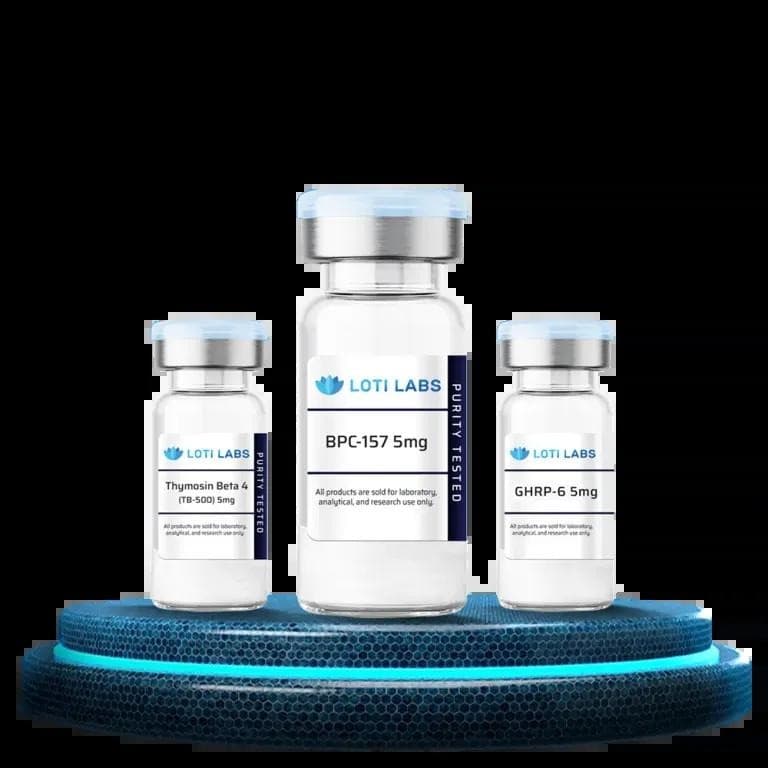
Peptides are short chains of amino acids linked together by peptide bonds through a condensation reaction between the amino group of one amino acid and the carboxyl group of another. This creates a covalent backbone with a free N-terminus and C-terminus that conveys essential information for molecular recognition and stability.
The primary distinction lies in size, with peptides typically containing fewer than 50 residues and often functioning as signaling molecules, while proteins are longer and fold into stable three-dimensional structures that perform structural, catalytic, or transport roles. There is a continuum between long peptides and small proteins, with insulin being categorized as a peptide hormone and collagen as a structural protein.
Peptides operate through several mechanisms including binding to specific receptors to initiate intracellular signaling cascades, modulating enzymes via competitive or allosteric interactions, and disrupting membranes in antimicrobial sequences. They can activate receptors that engage G-proteins or kinase pathways, resulting in second-messenger responses like cAMP or calcium flux.
Peptide research has practical applications in therapeutic design, metabolic research, tissue repair, and antioxidant studies. Their versatility in biochemical modulation makes them valuable tools for experimental exploration across various medical and scientific fields.
Peptides are categorized by length and biological function: dipeptides (two residues) serve as metabolic intermediates or signaling fragments; oligopeptides (3-20 residues) act as hormones or rapid-response signaling molecules; and polypeptides (exceeding 20-50 residues) can adopt protein-like domains for structural or enzymatic roles.
The sequence and structure significantly impact chemical stability, vulnerability to enzymatic degradation, and receptor affinity. The primary sequence conveys information essential for molecular recognition, stability, and interaction surfaces, while longer peptides can adopt secondary structures like alpha helices or beta sheets.
Peptides are involved in paracrine and endocrine signaling, where they bind to specific receptors to initiate intracellular signaling cascades. The duration and intensity of signaling are affected by peptide stability and receptor kinetics, ultimately modifying gene expression, enzymatic activity, or cellular metabolism.
Antimicrobial peptides function by interacting with lipid membranes, changing permeability, and compromising microbial integrity. This membrane disruption mechanism allows them to effectively target and neutralize harmful microorganisms.
Peptide functionality is affected by length, sequence, chemical stability, vulnerability to enzymatic degradation, and receptor affinity. Shorter peptides demonstrate high solubility and quick turnover, while longer oligomers begin to adopt secondary structures that influence their biological activity.
Curated from Press Services