
NewsRamp is a PR & Newswire Technology platform that enhances press release distribution by adapting content to align with how and where audiences consume information. Recognizing that most internet activity occurs outside of search, NewsRamp improves content discovery by programmatically curating press releases into multiple unique formats—news articles, blog posts, persona-based TLDRs, videos, audio, and Zero-Click content—and distributing this content through a network of news sites, blogs, forums, podcasts, video platforms, newsletters, and social media.

FAQ: Quality Control and Best Practices in Research Peptide Usage
TL;DR
Researchers gain competitive advantage by using Wholesale Peptide's high-purity peptides with verified quality control, ensuring reliable experimental results and faster publication timelines.
Peptide quality is verified through HPLC and mass spectrometry analysis, with proper storage at -20°C and detailed documentation ensuring experimental reproducibility and accuracy.
High-quality research peptides enable more reliable scientific discoveries, advancing medical knowledge and potentially leading to new treatments that improve human health worldwide.
Research peptides act as molecular tools that can reveal cellular secrets, from tissue regeneration to hormone dynamics, using advanced analytical techniques like HPLC and mass spectrometry.
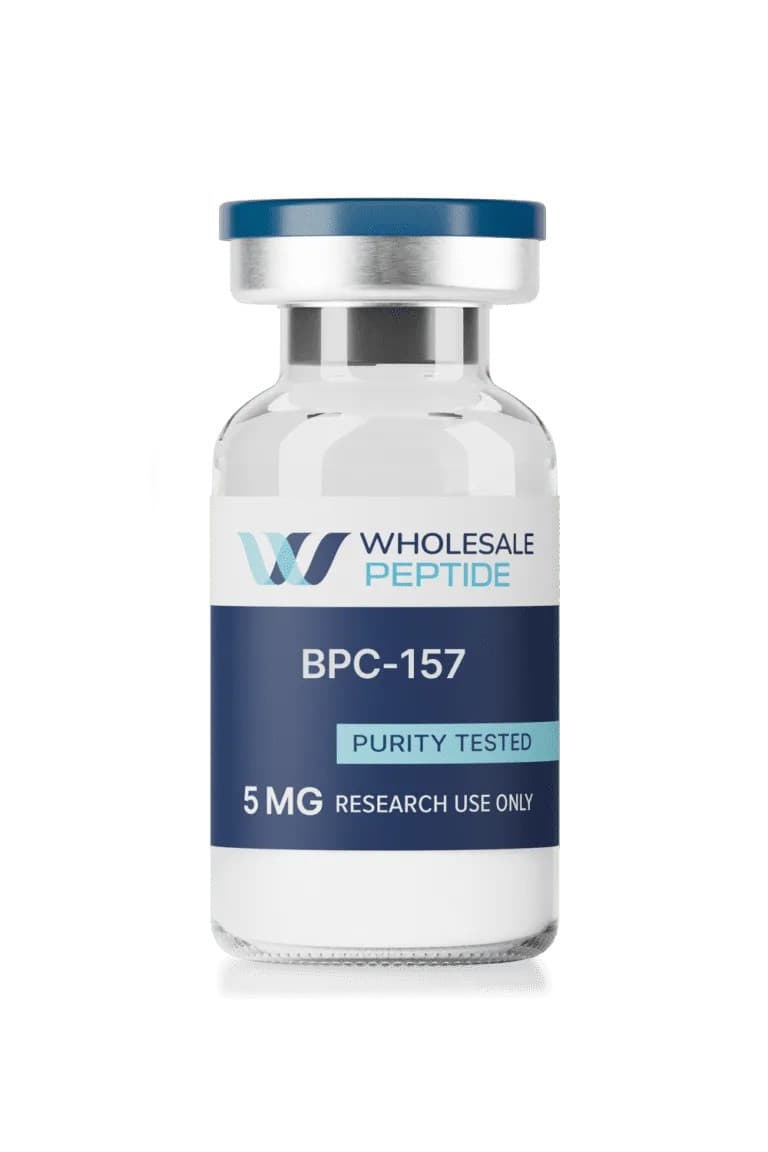
Research peptides are specific sequences of amino acids that serve as molecular instruments for examining signaling pathways, receptor interactions, and various biological mechanisms in both in vitro and in vivo environments. They function as ligands, substrates, or modulators, enabling researchers to detect particular biological effects with molecular accuracy.
Quality control is essential because any impurities or incomplete sequences can lead to misleading data, making verification before use critical for achieving reproducible and dependable results. High purity, thorough sequence documentation, and lot-specific quality control ensure the reliability of experimental outcomes.
Common classes include signaling peptides (receptor agonists/antagonists for cellular pathways), regenerative peptides (tissue repair and wound healing models), metal-binding peptides (influencing biomarkers in biological assays), growth hormone-related peptides (endocrine system studies), and modulators like melanocortins (metabolic, pigmentation, or behavioral research).
Researchers should review analytical data including high-performance liquid chromatography (HPLC) for chromatographic purity and mass spectrometry (MS) to confirm molecular mass. They should obtain a certificate of analysis (COA) with lot-specific HPLC and MS data, declared purity percentage, and storage conditions, with high-resolution LC-MS providing additional verification.
Catalog peptides are pre-manufactured sequences available in standard purities and quantities with quick turnaround, while custom synthesis is used for new sequences, non-standard modifications like labeling or PEGylation, or when exceptionally high purity is critical. Custom synthesis allows specification of synthesis strategies but has longer lead times and higher costs.
Researchers should assess documentation, manufacturing practices, and traceability by requesting lot-specific COAs with HPLC and MS data, MSDS for safety, clear storage instructions, and compliance with cGMP or ISO standards to ensure quality and reliability.
High-performance liquid chromatography (HPLC) quantifies chromatographic purity by separating peptide-related species, while mass spectrometry (MS) confirms molecular mass and expected adducts. High-resolution LC-MS (LC-HRMS) offers comprehensive verification by confirming amino acid composition, sequence, and impurity content in a single run.
Using peptides without proper quality verification can lead to misleading data due to impurities or incomplete sequences, compromising the reliability and reproducibility of research findings and potentially invalidating experimental results.
Researchers can visit Wholesale Peptide for information on research peptides and their applications in scientific studies.
Curated from Press Services